In the News
INTERVIEWS with Fazlur Rahman
“Fazlur Rahman and Brian H. Williams on A Novel Idea”
—KRCB’s A Novel Idea interview by Suzanne Lang
“Foreign physicians, American medicine”
—WJCT’s What’s Health Got to Do with It? interview by Dr. Joseph Sirven
“How Does Grief Influence Our Relationships and Decision-Making? w/ Dr. Fazlur Rahman”
—The Bánh Mì Chronicles, interview by Randy Kim
“Fazlur Rahman: Dedicate Yourself to the Writing Process”
—Writer’s Digest, interview by Robert Lee Brewer
“The Memoir Land Author Questionnaire 206: Fazlur Rahman, M.D.”
—Memoir Land, interview by Sari Botton
“Caring for the Whole Person”
—Cancer Today interview by Thomas Celona
“One Physician’s 50-Year Journey to Make Sure Empathy is a Part of Patient Care”
—Texas Medicine, the Journal of Texas Medical Association interview by Jason Jarrett
“A Doctor’s Life-Changing Realization About Empathy After Becoming a Patient”
—The Podcast by KevinMD interview by Dr. Kevin Pho
“A San Angelo Doctor’s New Book Highlights the Challenges of Rural Medicine”
—Texas Monthly interview by Sophie Novack
“Rural Cancer Care”
– Talk Nerdy podcast interview by Dr. Cara Santa Maria
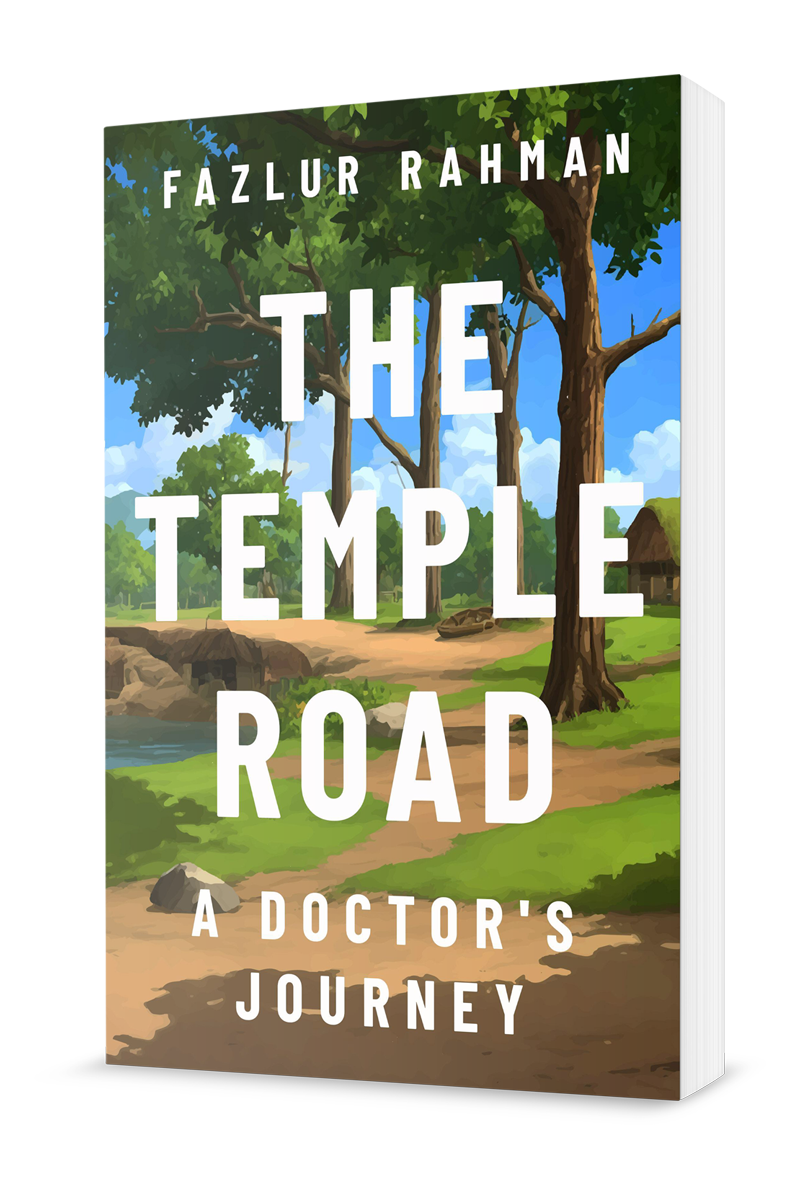
PRAISE, REVIEWS & ESSAYS for Temple Road: A Doctor’s Journey
“Eight Memoirs About Medicine, Illness, and Healing”
By Fazlur Rahman, original essay on Literary Hub
“More than a memoir, the book explores memory, identity, displacement, and the emotional realities of immigrant life. For Bangladeshi readers, it offers a rare reflection on the diaspora experience through the eyes of a physician who never lost connection with his roots.”
— Md Owasim Uddin Bhuyan, feature in Deshkal News
“What makes Dr. Rahman significant is that he did not confine these reflections to clinical practice. He transformed them into literature and public thought. His books, The Temple Road: A Doctor’s Journey and Our Connected Lives: Caring for Cancer Patients in Rural Texas, are not simply memoirs of medicine. They are meditations on migration, ethics, grief, loneliness, memory, and the fragile bonds connecting people across cultures.”
—Md Owasim Uddin Bhuyan, feature in Prothom Alo
“Luminous…An engaging, resonant story—one that speaks to immigrants, to those in medicine, and anyone striving to build a meaningful life.”
—Azra Raza, M.D., author of The First Cell: And the Human Costs of Pursuing Cancer to the Last
“I was immediately captivated by the storytelling in this touching and revealing medical memoir and transported to an almost timeless cultural and historical milieu.”
—Jonathan Balcombe, author of What a Fish Knows and Super Fly
“This is one book that stands out among the clutter. It will surely engage and inspire readers. We all have our Temple Road to travel.”
—Alfredo Quiñones-Hinojosa, MD, author of Becoming Dr. Q: My Journey from Migrant Farm Worker to Brain Surgeon
“For Fazlur Rahman, a distinguished oncologist, writing is every bit as much an act of service as practicing medicine. And like all great autobiographies, The Temple Road is for and about its readers, an exemplum of attitudes and virtues that lead to a fulfilling life. Those who accompany Fazlur through the tiger-infested jungle of his boyhood just might find the courage and insight to face the tigers of their own minds.”
—Chris Ellery, winner of The X. J. Kennedy Award for Creative Nonfiction
“A refreshing balm of deep and crystalline remembering. To see the world through Rahman’s eyes is to remember that the earliest maps we make are sometimes the truest… Through his vivid and thoughtful prose, we too are allowed to delight and wonder in our own earliest understandings of what it is to be a self, and what it is to be alive and living in the middle of our own powerful story.”
—Tarfia Faizullah, author of Seam and Registers of Illuminated Villages
“Dr. Rahman writes with luxurious detail, great poignancy, and hard-earned wisdom. If you take this journey with him, I promise it will be one you will never forget.”
—Jerald Winakur, MD, MACP, FRCP, author of Memory Lessons: A Doctor’s Story and Human Voices Wake Us
“His observations and commentary on medicine and society, the cultures of the East and West, and fairness and justice clearly establish Rahman as a master storyteller. This is a most welcome addition to our contemporary literature because it proves beyond doubt that it is the immigrant population which makes America great, gives it its moral strength and the diversity it provides, its uniqueness in the entire world.”
—Dr. Kanti Rai, MD, Winner of the 2014 Wallace H. Coulter Award for Lifetime Achievement in Hematology
“Dr. Rahman weaves a beautiful narrative with resplendent imagery while describing various scenes from his childhood. His writing is lucid, absorbing, and carries poise and precision. His thoughts on medicine stem from deeply entrenched core values of serving humanity with kindness and compassion…The Temple Road is an enthralling read for not only immigrants or medical personnel but for anyone striving to achieve success in today’s globalized world.”
—The Pioneer, Sunday Edition (India)
“The narrative is honest and simply told, Rahman makes no bones about admitting to his mistakes…it would also be a handy point of reference for medical students.”
—Deccan Chronicle (India)
“The movement from Bangladesh to America has been a tortuous one, but rewarding and enriching for Fazlur Rahman whose memoir chronicles the many steps in this remarkable life-story…As an account of a man and his moments, this is also a redemption of cherished values, of life’s liveliness making the entire journey worthwhile, and worth recounting with the panache that Rahman has.”
—The Assam Tribune (India)
“A memoir that cracks you up as often as it teaches you something…Rahman’s memoir is full of life lessons and funny stories, and is a wonderful, enriching, read for somebody looking to be both touched and entertained.”
—Kitaab (Singapore)
“Rahman believes in combining the best of both worlds [in medicine]. While he acknowledges that technological advancement such as MRIs, CAT or PET scans are indispensable for treating a patient, he also insists that a ‘bed-side understanding’ is also invaluable to the profession. If not for his commentary on the culture and the medicinal practices in the East and the West, Rahman’s book should be read for some hilarious anecdotes.”
—The Telegraph (India)
“Heart-warming autobiographical tale. His life experiences are sometimes sad and wistful, but more often they are piquant and laced with a wry sense of humor.”
—LifePositive (India)
“Born and raised in a Mullah family in a remote village in Bangladesh, Fazlur Rahman grew up with hardships and heartaches and lived amidst myths and superstitions. He soon finds comfort in medicine and goes on to become a sought-after oncologist in the U.S. The book traces his inspiring journey, from the jungles in Bangladesh to medical centers in New York and Houston.”
—The Hindu (India)
“We soon traverse the temple road as Rahman passes a patch of road, shadowed by leafy trees and a temple that lends its spookiness and an air of the unknown…The book is the journey of a man who led an ordinary life, but it still manages to sound intriguing with its tale of tigers, exam results, Bangladesh’s impending war of independence, racial discrimination in the US…Rahman is of a different era and his book is a window into that world.”
—Outlook Traveller (India)
PRAISE & REVIEWS for Our Connected Lives
“This book is not just a guide for doctors, but a call to all of us to better care for our loved ones battling this relentless disease.”
—101.5 KEAN FM article by Rudy Fernandez
“This is a book about compassion, dignity and hope against the odds. We highly recommend Our Connected Lives: Caring for Cancer Patients in Rural Texas.”
—BreakingCancerNews.com article by Jamie Reno
In Our Connected Lives: Caring for Cancer Patients in Rural Texas, Dr. Rahman shares the many experiences of a 35-year career in cancer practice, during which time he immersed himself into not just taking care of his patients’ challenging medical needs, but learning from his patients and getting to know their lives, their families, and the circumstances that made each patient unique… Dr. Rahman emphasizes the importance of empathy in patient care, especially in cancer care. In the same vein, he urges nurturing empathy in clinical training by teaching medical humanities. “Empathy helps to build bonds between doctors and patients and lessens patients’ anxiety and distress; in turn, it improves patient satisfaction and clinical outcome,” he noted.”
—The ASCO Post
Read the full review
“Rahman’s Our Connected Lives masterfully integrates case-study storytelling with the nuances of clinical practice to brilliantly address the humanism we all want in medicine but frequently can’t find in our health care system. The riveting stories illustrate the triumphs of personalized, engaged interaction between patient and caregiver, especially when the cards have dealt potentially bleak outcomes. Additionally, Rahman’s weaving of treatment decision-making facts into the stories is a valuable resource not only for health professionals but also for patients and families…”
—Choice
Read the full review
“Cancer touches countless lives worldwide. As a cancer researcher, I applaud Dr. Rahman’s effort to make cancer biology accessible to everyone in Our Connected Lives. As a physician, I appreciate how his thoughtful stories illuminate the practice of cancer medicine—not just by revealing the struggles patients and doctors face, but also by highlighting the importance of treating patients as people rather than cases. The lessons in this book are instructive for us all: cancer patients and their loved ones, general readers as well as the members of the medical profession.”
—Hagop M. Kantarjian, MD, Professor of Medicine and Chair, Department of Leukemia, MD Anderson Cancer Center, Houston, Texas
“Fazlur Rahman is a wonderful story-teller. I was immediately drawn in by the vivid characters, touched by their plights, and by the author’s depth of compassion.”
—Jonathan Balcombe, bestselling author of What a Fish Knows and Super Fly
“Dr. Fazlur Rahman’s Our Connected Lives: Caring for Cancer Patients in Rural Texas is a must-read, flush with all the richness of human life in the face of illness. In these pages, the cancer doctor walks alongside his patients through the difficult conversations, complex medical decisions, losses and triumphs that cancer brings. Dr. Rahman’s intense empathy for his West Texas patients vivifies these pages, and drives him to provide excellent, diligent, humane care. Any reader who wants to know what cancer is like from the other side—the doctor’s side—will be enlightened to find in Dr. Rahman’s stories a testimony to how deeply doctors care for our patients and indeed how connected we all are, in the end. If you have doubted whether doctors actually care not only for patients but about them as human beings, this book will change you. It shows how the best doctors among us are, and how we all ought to be.”
—Rachel Pearson, MD, PhD, Humanities Director, Charles E. Cheever, Jr. Center for Medical Humanities and Ethics; Joe R. and Teresa Lozano Long Distinguished Professor in Bioethics; author, No Apparent Distress: A Doctor’s Coming of Age on the Front Lines of American Medicine
“The stories of each of these five unforgettable women and men make for powerful reading. These are mesmerizing page-turner tales, making us genuinely concerned about the lives of those individuals with cancer. But their stories are also relevant to other people, whether they have cancer or not.”
—Kanti Rai, MD, Winner of the ASH Wallace H. Coulter Award for Lifetime Achievement in Hematology
“Dr. Rahman takes us on a journey of resilience, love, and empathy. He has the ability to see light when many of us would see only darkness while caring for patients with cancer. This book shows us that not only are we all connected but also we walk together on the path of our lives. Moreover, he teaches us that empathy and hope are the most powerful tools we have to help our patients when they are most vulnerable, and that showing dignity to our patients is an integral part of care. This is a must-read!”
—Alfredo Quiñones-Hinojosa, MD, William J. and Charles H. Mayo Professor, Monica Flynn Jacoby Endowed Chair, James C. and Sarah K. Kennedy Dean of Research, Mayo Clinic; author of Becoming Dr. Q: My Journey from Migrant Farm Worker to Brain Surgeon
“The renowned clinician, Dr. William Osler, considered the “Father of Internal Medicine”, observed: ‘The good physician treats the disease; the great physician treats the patient who has the disease.’
Fazlur Rahman is not only a great physician; this remarkable man is also a wonderful writer.
From his humble beginnings in what is now Bangladesh (and for this story I highly recommend his cultural memoir, The Temple Road), and throughout his post-graduate training in internal medicine and oncology in New York and Houston, it took amazing fortitude and faith for Dr. Rahman to find his way to San Angelo, Texas. There he garnered the love and respect of its citizens through his delivery of high quality primary and specialty care over many decades.
How he accomplished this is the main thrust of this memoir. Every turn this writer takes—into medical science, the evolution of oncological treatments, the intricacies of doctor-patient-family relationships—serves to enlighten and enhance this story. This physician’s dedicated attentiveness to the daily, then yearly, then career-long practice of patient-centered “connected” medicine is rare in America’s fractured health system today, and we are all the poorer for it.
With this book, Dr. Rahman joins the ranks of other great physician writers: Anton Chekhov, William Carlos Williams, Richard Selzer, Oliver Sacks and Abraham Verghese among others. You will not be able to put this book down. And when the last page is turned, you may wonder where you might find someone like this author to care for you. I know I did.”
—Jerald Winakur, MD, MACP, FRCP, author of Memory Lessons: A Doctor’s Story and Human Voices Wake Us